
Israel's election has ended in deadlock. According to preliminary results, Netanyahu's bloc has 53 seats and Gadi Eisenkot's opposition 48. The Arab parties won 19 seats, the most in their history. Without them, nobody can form a majority; with them, almost nobody wants to govern. We look at who voted how, why Arab voters turned out and what comes next for Israel.
10/28/2026


Pre-election polls put Eisenkot's Yashar in the lead, and the overnight running tally overstated Likud. From the first hour of the count, the DataTimes.cz prediction showed a stalemate: Netanyahu's bloc will end up with 53 seats, Gadi Eisenkot's opposition with 48, and the 19 members of the Arab parties will decide whether anyone has a majority.
10/27/2026


Flávio Bolsonaro won the first round, gained the backing of three defeated candidates and led in the polls. Yet Lula remains president. Between the two rounds he added 10.4 million votes, more than all the eliminated candidates received together in the first round. The outcome was decided by people who had not voted the first time or had cast an invalid ballot.
10/26/2026

Polls before the runoff had Flávio Bolsonaro slightly ahead, and during the night the running count briefly put him in front of Lula. From the first minutes of the count, however, the DataTimes.cz prediction pointed to a win for the incumbent president: Lula will finish on 51.8 per cent and beat the son of his predecessor by more than four million votes.
10/25/2026

Between the first and second rounds of the Senate election, ANO's candidates lost a third of their votes, their opponents only a tenth. The voters of candidates who did not make it to the run-off went mainly to ANO's rivals. The governing parties won none of the 27 seats, and only one woman was elected.
10/17/2026

48.00% of voters turned out, 1.9 percentage points more than in 2022, and turnout rose in 12 of the 14 regions. But in the quarter of larger towns with the lowest turnout it fell in 18 of 24. Five towns are below 30% this year; four years ago there were none.
10/16/2026

In the 14 cities and 8 Senate districts with counted results, between 38% and 76% of people who voted for ANO last year did not vote (median 54%). Among SPOLU voters, no more than 20% stayed away in 20 of the 22 places (median 7%). The estimates are based on polling-district results and two independent methods.
10/12/2026

The share of women on candidate lists for Czech municipal councils has been rising since 1994 and this year reached 35%. Among those elected, however, it is consistently four to five percentage points lower, and among mayors lower still. The larger the municipality and the higher the office, the fewer women.
10/2/2026

Next Friday and Saturday, councils will be elected in 6,251 Czech municipalities. Half of them have fewer than 500 inhabitants; in Austria, only one municipality in twenty is that small. Running the smallest municipalities costs almost twice as much per inhabitant, and in nearly half of them only a single list of candidates is standing. Why Czechia has so many municipalities, and what happened when Austria merged its own.
10/2/2026
Die Linke won the Berlin election with 25.7% and took 47% among voters under thirty. Election-day data and results from 1,572 polling districts show that age and housing in a city of renters were decisive. In Czech media the party is often portrayed as a far-left force comparable to the AfD. Political scientists, the offices for the protection of the constitution and its record in government point to something else: a radical, not an extremist party, whose risks lie elsewhere than Czech coverage suggests.
10/2/2026

For the first time in the history of the Federal Republic, the CDU has failed to win seats in a state parliament. Our data prediction showed shortly after the count began that the party would stay below the five per cent threshold.
9/20/2026

Sweden is electing a new Riksdag today, from 8:00 to 20:00. The latest polls, conducted on 4–11 September, give Magdalena Andersson's red-green bloc a lead of 45.9–51.5% against 47.8–49.0% for Ulf Kristersson's governing coalition – in the closest estimate, the difference is a single seat, 175 to 174. If the right wins, the nationalist Sweden Democrats could take government posts for the first time in history: they agreed on this in March with the Liberals, who themselves are above the 4% threshold by only a small margin.
9/13/2026

Political parties' answers to 100 key questions reveal where the Czech Republic is heading.
10/13/2025

Just as in the previous electoral period, we have been processing all relevant polls since the last parliamentary elections...
2/18/2025

How voting advice applications increase informed political participation.
1/1/2025

Hybrid campaigns, algorithm manipulation and influence operations show how democratic processes can be destabilised.
12/20/2024

The annulment of the presidential election over a hybrid attack exposes how vulnerable democratic processes are.
12/8/2024

Telling the detailed story of the elections.
11/10/2024

Real-time predictions are reshaping election nights.
9/20/2024
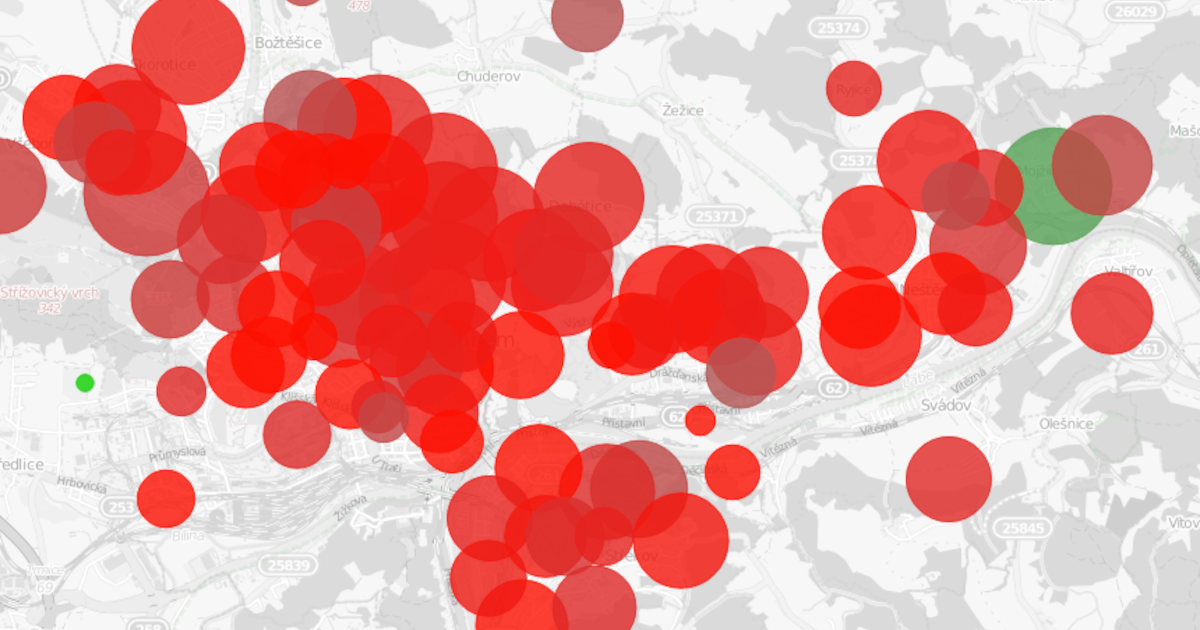
Analytical methods to detect irregularities in election results.
7/8/2024

Detailed data analysis reveal hidden changes between elections.
6/30/2024